
New year hiring hit by last year’s budget blows?
Think outside the red box with a strategic approach to maximising existing staff, says Darren Race, Managing Director, Think Eleven.
Last year’s budget may not have hit employers with immediate shocks, but there are certainly costs incoming as businesses forge ahead into 2026 and beyond. A big consequence of the budget remains the growing cost of employing people.
The proposal to apply employee and employer National Insurance Contributions (NICs) to pension contributions made through salary sacrifice schemes from 2029 will add to wage bills, already affected by 2024’s NICs changes. Meanwhile, the rise in the National Living Wage comes into force in April, adding to the real-world impact where many employers are left asking themselves the question, “Can I afford a new hire?”.
As costs of taking on new staff continue to spiral, businesses across the UK are looking for alternatives. While some might turn to increased automation and AI, other employers may seek cheaper talent from overseas or rely on outsourcing work on a piecemeal basis.
While all these options have their merits, they come at a cost. Judicious employers, however, are turning to the most obvious solution, maximising the productivity of the existing workforce.
Optimising the current workforce
Employers must strike a careful balance when trying to get more from their current workforce. Nobody wants to overburden staff and risk losing valued employees. The smarter approach is to enhance capability rather than simply increase workload.
With visibility of the skills and competencies within the existing workforce, organisations can identify gaps, prioritise training, and create clear development pathways that not only boost retention, but also give employees the capability to optimise and increase productivity.
The quantity of data surrounding employee skills, capability, training needs, and development objectives, makes it very difficult to gain a complete, unfractured picture of workforce capability. This is where a dedicated management system can step in to support.
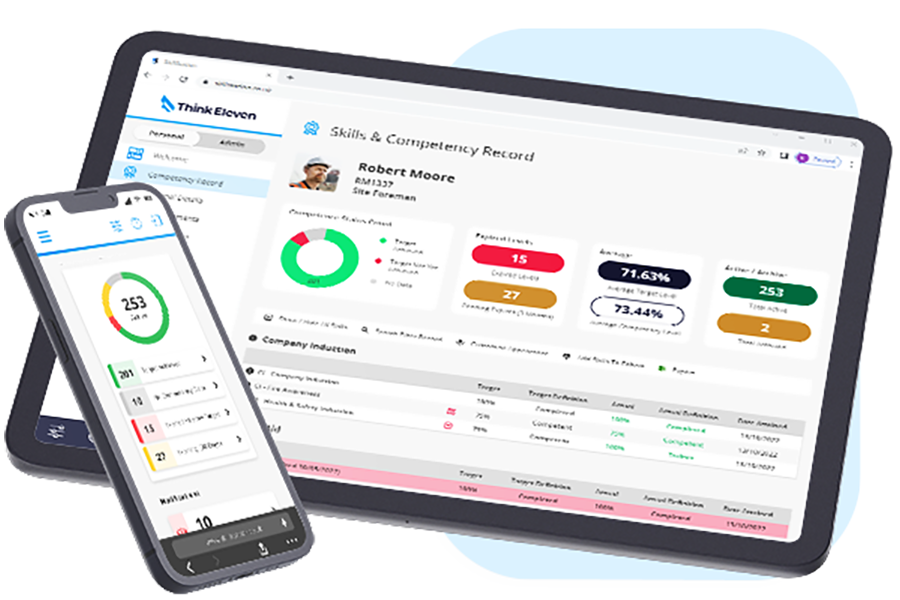
Choosing the right system is therefore crucial. While there are many platforms available, a robust Competency Management System (CMS) such as SkillStation provides a single source of truth and verifiable evidence of workforce readiness.
Why a Competency Management System?
A CMS is a structured approach to managing workforce capability that focuses on readiness and proven ability, rather than simply tracking training and completion. Its purpose is to verify that individuals can perform specific tasks safely, effectively, and to a defined standard over time, using a combination of on-the-job training and eLearning, assessments, knowledge evaluation, on-the-job experience, and supporting evidence.
Crucially, it can identify knowledge gaps, manage risk, and maintain audit and assurance readiness. By providing clear visibility of capability across roles, teams, and functions, a well-designed CMS supports workforce planning, succession management, operational resilience, and proactive risk management, helping ensure the right people are competent and available when they are most needed.
Dip into the hidden talent at your fingertips
One thing is clear, workforce planning is no longer as easy as simply recruiting another employee when needed. Whilst employers across the UK continue to navigate the impact of last year’s budget, the forthcoming March 3rd Spring Statement, could deliver more surprises.
But if businesses plan proactively and consciously leverage internal talent by auditing current competencies, companies can boost productivity in an agile way while reducing the need for new hires.
Of course, this approach has immediate operational benefits but can also help support long-term organisational goals, e.g. improving employee retention and clarifying career progression paths, all while fostering improved morale and engagement across the workforce. Now that is definitely thinking outside the red box.
To find out more about the difference between Training, Learning and Competency Management Systems read our recent blog here
Alternatively, request a live guided demo of SkillStation here